
A one-day gain, measured retrospectively
Google DeepMind says WeatherNext Cyclones predicts storm track, intensity and wind structure in one system. In its evaluation of cyclones from 2023 and 2024, the model gained more than 24 hours of average lead time across those measures: its three-day forecasts were comparable with what leading earlier systems achieved at two days.
That is a substantial reported result, but it is not a guarantee for every basin, storm or rapid-intensification event. The central figures come from the team that built the model and should be treated as a benchmark claim until reproduced under comparable conditions.
One model, many possible futures
DeepMind says the system was trained end to end on nearly 20 terabytes of atmospheric data and the IBTrACS archive of almost 5,000 historical storms. A 15-day forecast can run in under a minute on a TPU, and Google's 2026 system generates 1,000 ensemble members to represent multiple possible outcomes.
The full cyclone model uses inputs at roughly 28-kilometre spacing, while a smaller version uses roughly 111 kilometres. DeepMind itself calls the continued cyclone skill at those resolutions an open research question. Ensemble size describes sampled possibilities; it does not remove uncertainty.
Open weights do not make the full model lightweight
Google has released code and checkpoints in its official repository. The code is under Apache 2.0 and the repository states that other material is under CC BY 4.0, while input datasets can carry separate terms.
The repository also describes the software as experimental and warns that the full configuration needs accelerator-class hardware such as an H100 GPU or TPU. A compact notebook is more accessible, but it is not equivalent to reproducing the full released configuration.
Forecast support is not warning authority
DeepMind says WeatherNext helped the US National Hurricane Center during Hurricane Melissa. The NHC's own verification report documents unusually accurate forecasts for the storm, but it does not isolate a causal share for Google's model. LUMACTA NEWS therefore reports the collaboration without crediting one system for the final public warning.
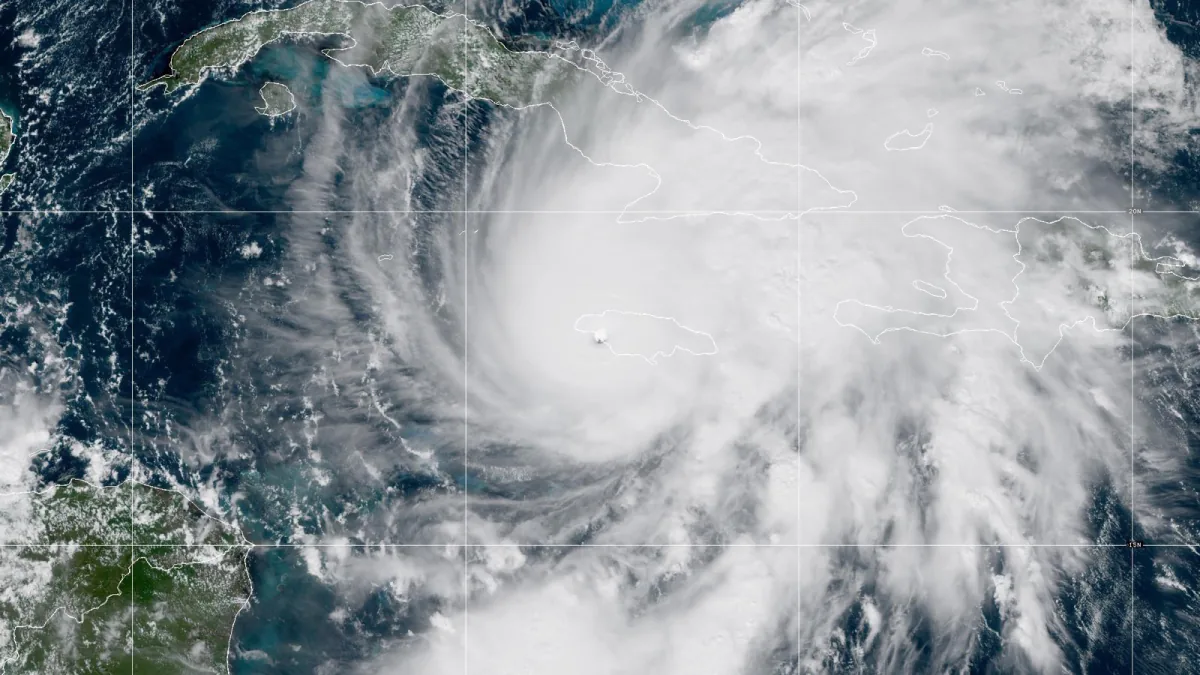
The hero image is NOAA's real GOES-19 observation of Melissa, not an AI output. WeatherNext remains a decision-support system; official warnings and evacuation guidance must come from the relevant meteorological and emergency authorities.
Sources & Methods
LUMACTA NEWS attributes performance claims to the model's creator, separates the retrospective benchmark from operational authority and uses a NOAA observation only to document the named Hurricane Melissa case.
- Google DeepMind — WeatherNext Cyclones — primary research announcement
- Google DeepMind — WeatherNext repository — primary code and model source
- National Hurricane Center — 2025 Hurricane Season Forecast Verification Report — primary agency report on NHC forecast performance
- NOAA — GOES floater archive for Hurricane Melissa — image source
- NOAA Ocean Service — image-use guidance — image rights source